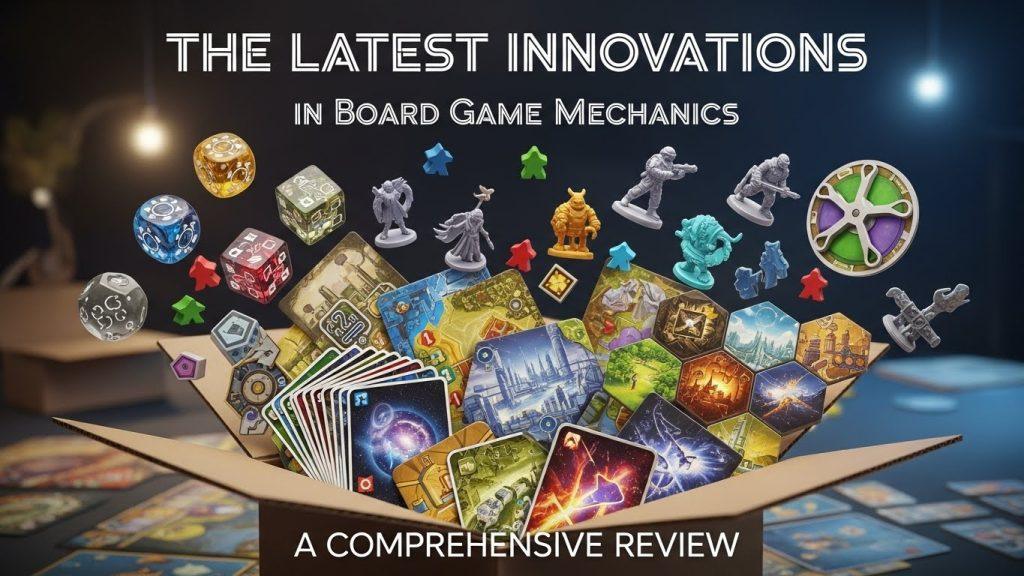
The Latest Innovations in Board Game Mechanics: A Comprehensive Review
Board games have experienced a renaissance over the past decade, with new and innovative mechanics captivating seasoned players and newcomers alike. This resurgence is not just about nostalgia; it’s about the evolution of gameplay dynamics that challenge and engage. In this comprehensive review, we delve into the latest innovations in board game mechanics that are shaping the landscape today.
1. Legacy Mechanics: Evolving Storylines
Legacy games have revolutionized the way we play board games by introducing a persistent and evolving game state. Unlike traditional games, legacy games are designed to be played over a series of sessions, with each game leaving a lasting impact on future plays. These games often involve permanent changes, such as tearing up cards, writing on the board, or adding stickers, creating a unique narrative that evolves with each session.
A prime example of this mechanic is “Pandemic Legacy,” which transforms the classic cooperative game into an epic adventure with twists and turns that alter the gameplay with each passing month in the game’s storyline. This innovation has led to a new genre of board games, providing players with a deeply immersive experience.
2. Deck Building: Strategic Customization
Deck building is a mechanic that allows players to construct their own decks of cards during the game, providing a customizable and strategic experience. Unlike traditional card games where decks are pre-constructed, deck-building games offer the thrill of crafting a unique set of cards that can adapt to evolving strategies and challenges.
Games like “Clank!” blend deck building with board exploration, offering players the chance to develop their decks while navigating a perilous dungeon. The mechanic encourages players to balance the acquisition of powerful cards with the risk of drawing unwanted attention from the lurking dragon.

3. Worker Placement: Tactical Resource Management
Worker placement mechanics are all about strategic allocation of limited resources. Players take turns placing their workers on various parts of the board to perform actions, gather resources, or achieve objectives. This mechanic emphasizes planning and resource management, often requiring players to adapt their strategies based on the actions of their opponents.
A standout example is “Scythe,” where players control factions in an alternate-history 1920s Europe. The game combines worker placement with engine-building mechanics, challenging players to optimize their actions while expanding their territories and resources.
4. Cooperative Play: Collaborative Problem Solving
Cooperative board games have gained popularity for their unique approach to gameplay, where players work together towards a common goal. This mechanic fosters teamwork and communication, challenging players to strategize collectively to overcome obstacles presented by the game itself.
“Pandemic” is a well-known cooperative game where players assume the roles of specialists combating global disease outbreaks. The game’s tension and urgency require players to collaborate effectively, making every decision crucial to preventing disasters.
5. Asymmetrical Gameplay: Diverse Player Roles
Asymmetrical gameplay introduces different roles or abilities for each player, offering diverse and unique experiences within the same game. This mechanic allows for varied strategies and interactions, as players must adapt to their specific abilities and objectives while considering the actions of others.
“Root” exemplifies this innovation, with players controlling different woodland factions, each with distinct mechanics and victory conditions. The game’s asymmetry creates dynamic interactions and strategic depth, as players navigate alliances, conflicts, and shifting power dynamics.
6. Tile Laying: Creative Board Construction
Tile laying mechanics involve placing tiles to build the game’s board, offering players the opportunity to shape the environment and influence gameplay. This mechanic encourages creative thinking and spatial awareness, as players must strategically position tiles to maximize their advantages.
“Carcassonne” is a classic example, where players draw and place tiles to construct a medieval landscape, claiming features like roads and cities for points. The ever-changing board ensures that no two games are the same, providing endless replayability and strategic challenges.
Conclusion: The Future of Board Game Mechanics
The innovations in board game mechanics continue to push the boundaries of creativity and engagement. From evolving storylines and strategic customization to collaborative problem-solving and diverse player roles, these mechanics offer players an array of experiences that challenge conventional gaming conventions.
As designers continue to experiment and blend different mechanics, the future of board gaming promises even more exciting developments. Whether you’re a seasoned gamer or a newcomer, these innovations ensure that the world of board games remains a vibrant and dynamic space, inviting players to explore new realms of strategy, storytelling, and fun.
Stay tuned for the next wave of board game innovations as designers harness new ideas and technologies to create experiences that captivate and inspire. The journey of board gaming evolution is far from over, and we can eagerly anticipate the next groundbreaking mechanic that will redefine the way we play.
7. Real-Time Play: Dynamic and Fast-Paced Action
Real-time play mechanics introduce an element of urgency and spontaneity to board games, where players must make decisions and act simultaneously within a set time limit. This mechanic challenges traditional turn-based gameplay, creating a high-energy environment that tests players’ quick thinking and reflexes.
An example of a game that utilizes real-time mechanics is “Space Alert,” where players are crew members aboard a spaceship, coordinating their actions in real-time to defend against external threats. The pressure of the ticking clock demands efficient communication and rapid decision-making, making every second count.
8. Drafting: Strategic Selection and Optimization
Drafting mechanics involve players selecting cards or tiles from a common pool and passing the remaining options to the next player. This mechanic is prevalent in games that emphasize strategy and foresight, as players must carefully choose options that benefit their strategy while denying their opponents.
“7 Wonders” is a highly acclaimed drafting game where players develop civilizations by selecting cards representing various structures and technologies. Each choice impacts future options, requiring players to balance immediate gains with long-term planning.
9. Narrative-Driven Mechanics: Storytelling and Immersion
Narrative-driven mechanics integrate storytelling elements into gameplay, enhancing immersion and emotional engagement. These games often feature rich backstories, branching storylines, and character development, inviting players to become part of an unfolding narrative.
“Mansions of Madness” exemplifies this approach, blending traditional board game elements with app-driven storytelling. Players explore haunted locales, uncovering mysteries and confronting horrors, with the app guiding the narrative and adapting to players’ decisions.
10. Hidden Movement: Stealth and Strategy
Hidden movement mechanics create tension and intrigue by allowing one or more players to move their pieces secretly. This mechanic often involves deduction and bluffing, as players must anticipate opponents’ moves without revealing their own strategy.
“Fury of Dracula” showcases hidden movement, where one player assumes the role of Dracula, secretly moving across Europe while other players act as hunters tracking him down. The mechanic fosters suspense and psychological warfare, as both sides attempt to outwit each other.
11. Modular Boards: Versatile and Adaptive Gameplay
Modular boards offer versatility by allowing players to rearrange or rebuild the game board each session, ensuring a unique experience every time. This mechanic provides endless variability and replayability, as the board’s configuration can significantly impact strategy and tactics.
“Gloomhaven” utilizes modular boards, with scenarios that change the layout and objectives with each playthrough. Players embark on quests within a sprawling fantasy world, with the modular setup ensuring no two adventures are alike.
Conclusion: Embracing the Innovation
The landscape of board game mechanics is a testament to the creativity and ingenuity of designers who continuously seek to innovate and inspire. These mechanics not only redefine how games are played but also how players experience storytelling, strategy, and camaraderie.
As we look to the future, the potential for new mechanics and hybrid systems promises to keep the board gaming community vibrant and dynamic. Whether through the tension of hidden movement, the urgency of real-time play, or the deep immersion of narrative-driven mechanics, the possibilities are truly limitless.
For enthusiasts and casual players alike, embracing these innovations means opening the door to diverse, challenging, and unforgettable gaming experiences. As we eagerly anticipate the next wave of creative breakthroughs, the world of board games remains a playground of boundless imagination and exploration.
12. Hybrid Mechanics: Merging Digital and Analog
The fusion of digital and analog elements in board games is a burgeoning trend that enhances interactivity and complexity. Hybrid mechanics utilize apps or digital components to manage certain aspects of the game, providing dynamic scenarios, streamlined bookkeeping, and enriched narratives.
A standout example is “Descent: Legends of the Dark,” where a companion app orchestrates the campaign, handling enemy actions and story progression. This integration allows players to focus more on strategy and story, while the app ensures a seamless and immersive experience.
13. Economic Simulation: Building and Managing Empires
Economic simulation mechanics focus on resource management, trading, and economic growth, challenging players to optimize their strategies in a competitive market. These games often require players to balance income and expenses, invest wisely, and outmaneuver opponents in economic warfare.
“Brass: Birmingham” exemplifies economic simulation, set during the Industrial Revolution. Players build networks and industries, with strategic decisions impacting their economic success. The game’s depth and complexity make it a favorite for those who enjoy intricate economic challenges.
14. Dice Rolling Evolution: Beyond Randomness
Dice rolling is a classic mechanic, but recent innovations have transformed it from a simple element of chance into a strategic tool. Modern games often incorporate dice manipulation, custom dice, and dice drafting to add layers of strategy and reduce reliance on luck.
“Wingspan” uses custom dice to simulate bird feeding, with players able to manipulate outcomes through strategic actions. This approach maintains the excitement of dice rolling while giving players more control over their fate.
15. Social Deduction: Deception and Insight
Social deduction games revolve around players’ abilities to deceive and detect deception. These games create an atmosphere of suspense and intrigue, as players must navigate alliances, secrets, and betrayal to achieve their goals.
“One Night Ultimate Werewolf” is a popular social deduction game where players assume hidden roles, trying to identify the werewolves among them. The mechanic encourages psychological strategy, with players bluffing and analyzing behavior to find the truth.
Conclusion: A New Era of Board Gaming
The latest innovations in board game mechanics demonstrate an exciting evolution of the medium, offering diverse and engaging experiences for players of all backgrounds. From the strategic depth of economic simulations to the immersive narratives of hybrid games, these mechanics are redefining what board games can be.
As designers continue to push the boundaries of creativity, players can look forward to even more groundbreaking mechanics that will challenge, entertain, and inspire. Whether you’re drawn to the strategic intricacies of deck building or the social dynamics of deduction games, there’s no doubt that the future of board gaming is bright and full of possibilities.
For those eager to explore these innovations, the journey into the world of modern board games promises endless discovery and enjoyment. Embrace the change, and let the games begin!
About the Author